
Executive Memo: Understanding Empathy in Academia


TO: Dr. Courtney D. Cogburn (Associate Professor, Columbia University, School of Social Work; Lead, 1,000 Cut Journey)
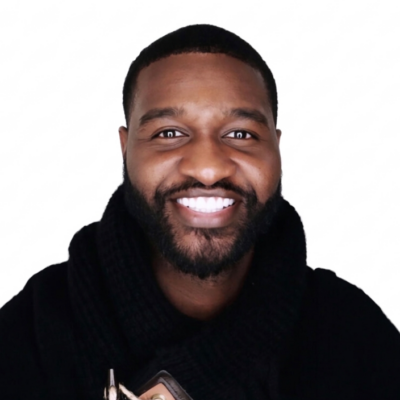
FROM: Dr. Eli Joseph and Dr. Janice Gassam Asare
RECORDING DATE: May 18, 2026, at 2:00 PM ET
RELEASE DATE: May 25, 2026
PODCAST EPISODE: Quantifying Racial Disparity and the Architecture of Empathy
RELATED BRIEFINGS: Understanding the Seven Trust Languages; Is Higher Education Immune to Colorism?
PODCAST SCORE: Mirror of Empathy
Editor’s Note: The Academic Boardroom’s episodic memoranda publish the full scope of our internal preparatory research, core market data, and targeted queries before recording. Some of the questions documented before our recording may have been modified or omitted in our episode.
THE FRAGMENTATION OF THE EMPATHY GAP
Traditionally, the way that organizations have approached diversity and equity has been largely dependent upon “storytelling,” in the hopes that just by sharing stories there would create enough motivation to spur systemic change. However, the concept of “Empathy Fatigue” has become an issue; therefore, many times, both statistical as well as anecdotal (first-hand) experiences no longer resonate with people at the highest levels of logic (executives).
Dr. Courtney Cogburn has succeeded in forging ahead through this stagnation by creating a Virtual Reality (VR) intervention. She has used immersive technology to allow individuals to experience, through immersion, what it is like to experience racism. She takes the conversation of understanding from a subjective viewpoint and develops a true experience through a continuum of experiences across the life course.
During this episode, we discussed how the “1,000 Cut Journey” serves as a technological reflection for leaders. We further look at how immersive data can help to bridge the gap between recognizing a disparity and designing a solution that can withstand the scrutiny of a corporation’s board of directors.
BEYOND THE SIMULATION: THE DATA OF HUMAN DIGNITY
As society becomes increasingly dominated by data, the challenge for institutions has moved from “Diverting Participation” to “Impact Checking”. The corporate board room is now looking for “Quantitative Pivots” that provide proof of impact by demonstrating a reduction of disparities, rather than simply relying on qualitative, “feel-good” metrics.
We will discuss how immersive data can be used to calculate the actual ROI of Equity. When a leader “feels” the friction of systemic bias, the conversation shifts from being solely the domain of HR to being viewed as an operational necessity impacting the health of the organization. For C Suite leaders, this shift implies that equity is now viewed as both a core element of “Institutional Agility” and as a long-term strategy for talent retention, rather than just a peripheral social goal.
THE SYSTEMIC DIRECTIVE: REDESIGNING THE BLUEPRINT
Viewing a university or a corporation as a “Social Engine” reveals specific friction points where traditional blueprints fail. We will analyze the “1,000 Cut Logic”: the realization that systemic failure is rarely the result of one catastrophic event, but rather the cumulative effect of minor, persistent inequities. In the age of AI-driven recruitment and promotion, the risk of “Algorithmic Bias” makes this systemic view even more critical. We must ensure that the “Virtual Mirror” is integrated into the technological infrastructure of the future, rather than added as a superficial layer. This section focuses on how leaders can use Dr. Cogburn’s findings to redesign their institutional blueprints, ensuring that equity is a baseline functional requirement rather than a fluctuating secondary priority.
THE SOVEREIGN SCHOLAR: BRIDGING THE COLUMBIA-CORPORATE DIVIDE
The “Sovereign Scholar” is the term given to Dr. Cogburn and describes someone whose reputation and passion are unaffected by the institution in which they reside. She fulfills her mission across Social Work, Population Studies, and African American Studies by creating a unified, impactful, high-performing product through her ability to merge/bridge/convert “Silos of Knowledge.” Those in academia will need to be “Sovereign Scholars,” as the traditional ivory tower has lost all stature/relevance. As the “Academic Shield” of the degree is becoming irrelevant, those in academia must begin to create mechanisms for themselves to store their academic “Portfolio of Discovery” through multiple platforms (VR labs, Forbes articles, etc.) to ensure that they can protect themselves against the rapidly changing priorities and political environment that are currently being experienced in academia.
We will also discuss the “Latency Crisis” in academia – the length of time that it takes from the creation of a new idea or theory until it is implemented by businesses in boardrooms. Dr. Cogburn has overcome this latency and has developed tools that can be utilized immediately in executive leadership. This portion of our time together will cover how to develop your own “Independent Body of Work,” and therefore, good luck in creating your own path to success as a researcher/academic.
THE 2026+ THRESHOLD: PRESERVING TRUTH IN A POST-REALITY ERA
To build an architecture of truth that will withstand the onslaught of deepfakes and misinformation as we approach 2027, we face an existential crisis with respect to how we can keep truth intact through the decommissioning of traditional gatekeepers—the implication is that in this post-reality era, we must also build an architecture of truth. Dr. Cogburn’s work provides us with a bio-archive of experience that is difficult to erase or distort due to its nature of being embedded in a living and dynamic manner; the bio-archive and the virtual record provide us with the means to document the historical accounts of systemic disparity for future generations by documenting the lived experiences of those impacted by these disparities.
Rather than measuring a scholar’s worth based upon their traditional metrics (i.e., citations), we may also take into consideration their metric of discovery – how their work has affected the nation’s consciousness. What does this mean for re-evaluating the ROI for higher education? In closing, as we consider the year 2030, we will identify what the ultimate proof of success will look like and how we will identify it through changes in policy, corporate data, or the development of a shared reality where thousands of people will have their grievances addressed through a fundamental structural redesign.
Questions to Consider for This Episode
Note: Some of the questions documented before our recording may have been modified or omitted in our episode.
- How do we transition from measuring “diversity awareness” to “real-time behavioral transformation” in the C-suite using immersive technology?
- How do we ensure that immersive empathy tools provide deep structural insight for executives rather than becoming mere “empathy tourism”?
- How can corporate boards utilize “dignity data” and immersive VR findings to calculate the actual ROI of equity and talent retention?
- How do we identify the specific “friction points” in the corporate engine to prevent the “1,000 cuts” of systemic bias from being automated into future AI-driven recruitment algorithms?
- How can leaders train managers to see minor, everyday “micro-interactions” as direct symptoms of a “macro” structural failure?
- As traditional university credentials face declining relevance, how can scholars leverage “Media as a Classroom” (e.g., Forbes, VR labs) to build an independent “Portfolio of Discovery”?
- In an era of deepfakes and misinformation, how can we use immutable “virtual records” and bio-archives to protect the truth of lived experiences?