
Executive Memo: The Unpredictable Paradox of Sports Media
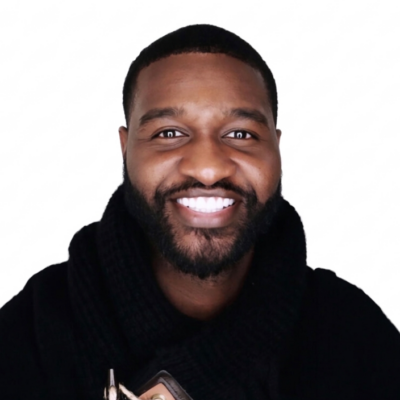


TO: Jeff Bennett (Founder, Data Points LLC; current VP, FanDuel Sports Network, former VP, ESPN)
FROM: Dr. Eli Joseph and Dr. Janice Gassam Asare
RECORDING DATE: April 15 2026, at 2 PM EST
RELEASE DATE: May 4, 2026
PODCAST EPISODE: The Talent-Data Balance: Navigating the Unpredictable Paradox in Sports Media
PODCAST SCORE: Media Playbook
Editor’s Note: The Academic Boardroom’s episodic memoranda publish the full scope of our internal preparatory research, core market data, and targeted queries before recording. Some of the questions documented before our recording may have been modified or omitted in our episode.
THE EROSION OF THE SUBJECTIVE SHIELD IN THE SPORTS MEDIA INDUSTRY
Historically, the sports media ecosystem was fortified by the “Subjective Shield”—a protective layer of human intuition that prioritized legacy narratives over empirical evidence. For decades, the “Amateur Narrator” dominated the airwaves, protected by a lack of sophisticated tools to quantify the exact efficacy of a “gut feeling” or a talent’s specific marketability. In this era, institutional decisions were often based on “who knew who” rather than “what worked where.” However, as we approach the mid-2020s, this shield has experienced a catastrophic failure. We have entered the “latency crisis”: the time between a sporting event and its data-driven monetization has shrunk to near zero. Jeff Bennett, having founded ESPN Analytics, was the primary architect who first pierced this shield. He didn’t just introduce numbers into the broadcast; he introduced a new logic layer that forced legacy institutions to reconcile with objective reality. This transition from the 1994 “Tape Room” to the “Executive Suite” serves as the definitive blueprint for the modern professional who must navigate the shift from being a mere spectator of data to becoming an active architect of its institutional implementation.
THE VOLATILITY PARADOX: THRIVING INDUSTRIES VS. UNSTABLE INSTITUTIONS
The most jarring characteristic of the current labor market is the volatility paradox. While the sports betting and prediction market sectors are experiencing record-breaking “category growth”—measured by total handle, user acquisition, and cultural dominance—the institutions housing them are undergoing violent structural decommissions. We are witnessing a “thriving category” co-existing with “bleeding institutions.” Prediction markets have evolved from a fringe hobby to the primary editorial North Star; the “betting line” now dictates the script more effectively than traditional “expert analysis.” Jeff’s recent transition from FanDuel and Main Street Sports Group highlights a systemic failure of legacy RSN models to adapt to the speed of direct-to-consumer logic. We will explore how to frame an executive layoff not as a personal failure of performance but as a “strategic decommissioning” of an outdated institutional structure. In this landscape, prediction markets are redefining the very concept of “truth” and “value,” requiring a new kind of leadership that can manage a team’s morale while the institutional floor is shifting beneath them.
THE TALENT-DATA BALANCE: BRIDGING THE SUBJECTIVITY GAP
The talent-data balance represents the next frontier of human-machine collaboration in the C-suite. In 2010, the “ROI of a Stat” was speculative; today, it is the fundamental currency of audience engagement and retention. Jeff’s career trajectory is unique because he bridged the “Subjectivity Gap” by applying mathematical rigor to the most human elements of the industry: talent and storytelling. At FanDuel, he managed on-air talent strategy through the lens of a data architect, proving that “data logic” can enhance and protect “human personalities” rather than replace them. This section focuses on how institutions can transition from merely “tracking data” to “trusting data” as a decision-making partner. We will dive into the mechanics of how metrics like Total QBR moved from a server room to the SportsCenter desk and how Jeff protected the “Soul of the Storyteller” while satisfying the “Requirement of the Spreadsheet.” This dyad is the only way to prevent institutional innovation from becoming “innovation theater”—a multi-billion-dollar liability that fails to produce functional breakthroughs in a high-stakes, data-first economy.
THE EXECUTIVE DIRECTIVE: THE FREE AGENT PLAYBOOK
In an era of high-frequency layoffs, the “Free Agent Playbook” becomes the mandatory curriculum for every executive. Jeff Bennett’s recent “unrestricted free agency” serves as a case study in building a “Rare Blend” portfolio. In the TAB framework, we view a multi-hyphenate skill set—editorial research, talent strategy, and data analytics—as a career hedge against institutional volatility. When an industry is “thriving but unstable,” narrow specialization is a career liability. We want to explore the concept of the “generalist specialist”: the leader who can anchor a daily studio show like Golic & Golic while simultaneously managing complex vendor relationships and global data pipelines. For the university provosts and C-suite leaders listening, Jeff’s perspective on maintaining professional momentum during a shutdown is critical. The “ROI of Composure” is the ultimate human differentiator in an automated economy. We will discuss how to identify “Thriving but Unstable” signals in a market before they impact your personal bottom line, ensuring your value remains a non-depreciating asset.
THE LEADERSHIP DIRECTIVE: THE 2027 THRESHOLD
As we gaze toward the future, the traditional Regional Sports Network (RSN) model is destined for extinction, replaced by a “direct-to-consumer” logic that prioritizes individual autonomy over bundle-based security. If Jeff were given a “blank slate” to architect the sports media institution of 2027, would it be centered on human “influencers” or “algorithmic precision”? We suspect the answer lies in the “Dyad.” This section explores a future where “prediction markets” are the primary interface for all sports consumption, shifting the focus from historical reporting to future-casting. We will also examine the “ROI of Data Points”—Jeff’s consulting model—which signals a shift toward “Fractional Executive Leadership.” In this new model, expertise is “rented” for specific “doses” of innovation rather than owned indefinitely by a single institution. This shift has massive implications for higher education; if the market demands “just-in-time” expertise, how does the four-year degree adapt to ensure its graduates don’t become “depreciating assets” before they even launch into the professional arena?
POTENTIAL QUESTIONS TO CONSIDER FOR THIS EPISODE
Note: Some of the questions documented before our recording may have been modified or omitted in our episode.
On the Erosion of the Subjective Shield:
- How did you convince “Old Guard” broadcasters to trust an algorithm like QBR (Quarterback rating in football) over their own eyes?
- Was there a specific moment in the “Tape Room” where you realized that data would eventually devour traditional sports research?
On the Volatility Paradox:
- How do you explain to a high-performing team that their division is “winding down” while the industry itself is hitting record revenue?
- If the gaming (sports betting) and prediction industry is “thriving,” why are the institutions within it so structurally fragile right now?
On the Talent-Data Balance:
- When managing on-air talent, what is the one data point that most accurately predicts if a personality will resonate with a betting-focused audience?
- If you were hiring a sports management graduate tomorrow, would you prefer a “Data Scientist who loves sports” or a “Sports Expert who knows Python”?
- What is the “Hidden Skill” that most Sport Management programs are failing to teach in the AI era?
On the Free Agent Playbook:
- You brilliantly called yourself an “unrestricted free agent”—how do you mentally and professionally pivot from “VP of an Institution” to “Founder of a Consultancy” in under 24 hours?
- What is the “Rare Blend” skill that you think is most lacking in current MBA or Sport Management graduates?
Look forward to the future:
- If “Direct-to-Consumer” is the future, does the “Brand” (ESPN/FanDuel) still matter, or does the “Metric” (the data) become the brand?
- You mentioned your “rare blend” of experience—how can a young professional build that “blend” without waiting 30 years?
- What is the first thing an executive should do on Day 1 of “unrestricted free agency” to remain visible to the market?