
Executive Memo: Navigating the NIL Landscape in College Sports
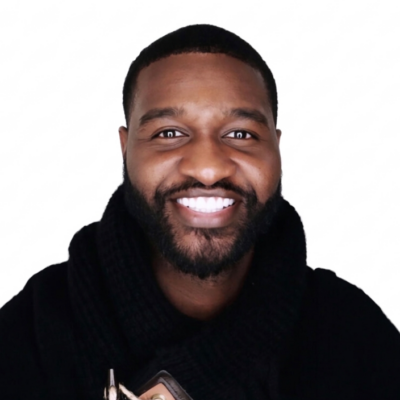


TO: Erin Adkins (Chief Strategy Officer; Executive Senior Associate Athletics Director, UCLA Athletics)
FROM: Dr. Eli Joseph and Dr. Janice Gassam Asare
RECORDING DATE: April 8, 2026, at 1 PM EST (10 AM PST)
RELEASE DATE: April 29, 2026
PODCAST EPISODE: The Architecture of the Athlete-Executive – NIL & The New Institutional ROI
PODCAST SCORES: Championship Pivot; Finals Review
Editor’s Note: The Academic Boardroom’s episodic memoranda publish the full scope of our internal preparatory research, core market data, and targeted queries before recording. Some of the questions documented before our recording may have been modified or omitted in our episode.
THE EROSION OF THE AMATEUR SHIELD
Historically, the “Amateur Shield” protected athletic departments from the complexities of the free market, allowing them to focus on “athletic completion” rather than “professional integration.” However, as the gap between collegiate sports and professional business narrowed, the athletic director now faces an existential crisis of value. As of 2025, the total NIL market has exploded to an estimated $1.67 billion, with projections suggesting collective compensation could exceed $6 billion by 2030. This shift fundamentally ends the century-long claim that student-athletes are mere amateurs.
The NIL directive must shift from mere “compliance” to “professional infrastructure.” If a student-athlete’s tenure no longer guarantees a baseline of professional readiness—largely because the “mechanical” aspects of sports marketing are being consumed by automated agency platforms—the institution must pivot to “state-based readiness.”
This means the NIL strategy must verify an athlete’s ability to synchronize their brand “state” with the immediate requirements of a corporate professional environment. We are seeing a “latency crisis” where state laws and market triggers evolve faster than athletic department structures. The goal of this briefing is to eliminate this training latency.
THE NIL LATENCY CRISIS & THE BRUIN ROI
The “Latency Crisis” in athletics is the structural failure of institutions to update their NIL support models at the speed of legislative and technological change. While a university senate or an NCAA committee may take years to approve a policy, the underlying market (such as AI-driven brand analytics) undergoes major shifts in months. For example, the June 2025 House v. NCAA settlement fundamentally reshaped the landscape, authorizing direct revenue sharing of up to $20.5 million per program for the 2025-26 season.
For a flagship brand like UCLA, this crisis is acute. Unlike smaller programs that trade on local novelty, UCLA must trade on “functional utility.” The Bruin ROI depends on the university’s ability to act as a localized engine for the “athlete-executive” economy.
The Synchronization Model: Moving away from a “4-year eligibility” load toward a model where the university acts as a lifelong partner, providing “modular updates” to an athlete’s business logic.
The Growth Portfolio: Framing NIL participation not as a “payout” but as a capital investment that requires regular “maintenance” to avoid professional obsolescence.
ATHLETIC STATE MANAGEMENT
“State management” in this context refers to the ability of a student-athlete to recognize the “state” of a business opportunity and apply the correct professional logic to solve it. Traditionally, universities have siloed “Life Skills” into elective workshops. In 2025, AI has moved from “pitch deck to plumbing,” with tools now automating highlights, contract disclosures, and predictive brand analytics.
The new mandate is to embed professional awareness into the “athletic core.” A system-wide standard for “Human Differentiator” skills—such as complex synthesis and ethical reasoning—creates consistency. These are areas where AI and automated agencies cannot provide value. By making “state management” a mandatory component, UCLA ensures its graduates are not just “players” but “talent architects” of their own brands.
THE ARCHITECTURE OF THE ATHLETE-EXECUTIVE
The transition from a “theoretical athlete” to a “functional executive” requires a translation of “elite logic” into “practical scale.” It is the difference between managing a few star players and implementing a resilient NIL strategy for hundreds of athletes across diverse sports.
Preparing the Preparers: Coaches and staff are the frontline of this ROI. If a coach is still using a 2021 NIL playbook, the athlete is being prepared for a world that no longer exists.
Mass vs. Elite Impact: While star athletes command seven-figure valuations, 68% of NIL deals remain under $1,000. The UCLA architecture must provide a “Professional Logic Layer” that scales value for the 90% of athletes who will not play professionally, ensuring their “Athlete-Executive” training translates into the general labor market, where sports analysts now earn a median of $70,000 with a master’s degree.
How do we take sophisticated brand theories and apply them to 700+ student-athletes with diverse market values?
THE 2027+ DECOMMISSIONING
As we approach the “2027+ Threshold”—the point where 70% of professional roles will require entirely different skill sets—the athletic department must make the “hard calls” regarding legacy structures. Many rigid athletic schedules and “siloed” academic support models are relics of an industrial-age system.
To fund the future of tech-augmented NIL learning, the department must lead the “Decommissioning” of these legacy systems. Resources saved from “legacy costs” must be redirected into “continuous adaptation” infrastructure—labs, brand-sync programs, and AI-literacy initiatives.
For example, traditional “resume workshops” are obsolete in an era of skills-based hiring and AI-mediated fan journeys. UCLA must determine which administrative hurdles—such as rigid scheduling or outdated academic support models—are preventing the institution from reaching a state of total institutional agility.
We conclude with “Boardroom Inquiries” designed to force a confrontation with the most difficult realities of athletic leadership.
PRE-RECORDING RESEARCH & INQUIRIES
(Some of these questions were not recorded)
- The Reality of the Market
The 1% Gap: If the marketing advantage of a “college star” has shrunk due to the rise of independent “influencers,” what is the new “insurance policy” for a UCLA athlete?
Automation of Branding: With AI-driven platforms handling contract review and content creation, why does an athlete still need the institution to act as a brand intermediary?
The Commercial Pivot: As brand compensation to student-athletes grew 300% YoY in recent cycles, how is UCLA helping athletes move from “booster-led collectives” to “utility-based brand partnerships”?
- Operational Agility
The Two-Speed Problem: How do you manage an athletic department where NIL market cycles move every 6 months, but university policy cycles move every 3-5 years?
Modular Readiness: Is a 4-year degree still the optimal “unit of measure” for an athlete-executive, or should we move toward “just-in-time” business modules?
- The Final Verdict
The Executive Mandate: If you could mandate one specific “skill” that every student-athlete must possess by 2030, regardless of their sport, what would it be?
Reclaiming the ROI: Ten years from now, what will be the single most important metric for determining if an NIL strategy was “worth it”?
REFERENCES
American Orthopedic Society for Sports Medicine. (2025). Take care of the student-athlete in the era of the transfer portal and Name, Image and Likeness (NIL). Sports Medicine Update. https://www.sportsmed.org/membership/sports-medicine-update/spring-2025/take-care-of-the-student-athlete-in-the-era-of-the-transfer-portal-and-name-image-and-likeness-nil
CityAM. (2025). Why 2025 in sport marketing was the year that changed everything. https://www.cityam.com/why-2025-in-sport-marketing-was-the-year-that-changed-everything/
OCC Strategy. (n.d.) Scoring big: Unlocking the NIL opportunity in college sports. https://www.occstrategy.com/en/article/scoring-big-unlocking-the-nil-opportunity-in-college-sports/
Reach Capital. (n.d.). Beyond the game part 1: Charting the new frontier of NIL, sports and higher ed. https://www.reachcapital.com/resources/thought-leadership/beyond-the-game-part-1-charting-the-new-frontier-of-nil-sports-and-higher-ed/
UCLA Athletics. (2025). Bruin athletics: UCLA Athletics partners with Article 41 to launch groundbreaking NIL initiative. https://uclabruins.com/news/2025/8/18/bruin-athletics-ucla-athletics-partners-with-article-41-to-launch-groundbreaking-nil-initiative