
Executive Memo: Is the Degree Dead?
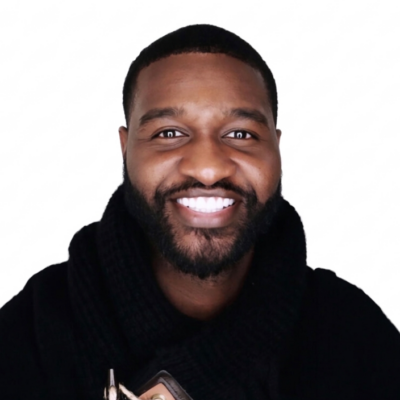 ,
Dr. Janice Gassam Asare
,
Dr. Janice Gassam Asare


TO: Dean Angie Kamath (NYU SPS)
FROM: Dr. Eli Joseph and Dr. Janice Gassam Asare
RECORDING DATE: April 1, 2026, at 2 PM EST
RELEASE DATE: April 20, 2026
PODCAST EPISODE: Is the Degree Dead? Reclaiming the ROI of Higher Education
RELATED BRIEFING: The Architecture of Accreditation
RELATED SCORE: The Academic Boardroom Theme Song
THE EROSION OF THE ACADEMIC SHIELD
In this episode, there is an interesting change in an important number: the unemployment gap between college graduates and high school graduates has gone from 6% in 2010 to just 1% today. College graduates have typically relied on their bachelor’s and graduate degree as a means of protection against the changes that happen to the economy (as a kind of “insurance”) when they become young professional workers in the labor market. Based on what our research shows, however, young professionals between the ages of 22-27 who recently graduated from college have an unemployment rate of 5.8%–nearly twice as high as the overall university-educated workforce–indicating that there is a long-standing problem with using degrees as a way to differentiate oneself within labor markets and therefore provide value to employers. According to a New York Times report, and excerpted from Yale’s Publication that was cited, universities are largely responsible for their own erosion of trust through placing more importance on prestige than measurable competence.
To commence our conversation, we will address the ongoing disappearance of the “automatic privilege” associated with holding a degree. One point of interest is the decline in youth hiring within the professional industries of both finance and insurance, where the number of youths hired has decreased by 14% as hiring institutions put a greater emphasis on automation versus entry-level humans for work. This leads us to an “entry-level vacuum” as many of these lower-level job responsibilities have been taken over by algorithms and are able to be completed 40% quicker than by recent college graduates. In addition to this external market pressure is an internal, “crisis of confidence” or so-called “trust crisis” in the Ivy League. Additionally, another aspect of this will be the findings from the Yale report where it states that 79% of grades at elite institutions are issued as either A or A-; this has led to a “signaling failure” whereby having a high GPA no longer means you are highly skilled; thus creating difficulty for employers to identify qualifications based on GPAs.
OBJECTIVE
The aim of this discussion is to have Dean Angie Kamath speak about how NYU SPS is valuing a degree differently since currently 78% of all young workers require a level of digital competence that is no longer an “exclusive” benefit of receiving a college degree, rather, it is now the baseline of required competencies.
DEAN ANGIE KAMATH’S WORKFORCE PHILOSOPHY
Dean Angie Kamath’s background is uniquely suited to address this crisis because she has consistently operated at the intersection of economic mobility and industry demand. Her tenure overseeing the NYC Department of Small Business Services’ Workforce1 Career Centers and her leadership at CUNY demonstrate a career-long commitment to “skills-based” outcomes. At NYU SPS, she has championed a model that doesn’t just grant degrees but builds “industry-aligned” pipelines. We will tie her experience at Moody’s Analytics to the current financial sector’s shift toward AI-driven efficiency, asking how she uses her private-sector lens to “future-proof” academic curricula.
We can also dive into her vision for the NYU SPS Emerging Technologies Collaborative. The goal is to highlight how she is moving the institution away from “prestige-based” education toward “utility-based” education. We will discuss her philosophy that the university must act as a bridge, ensuring that the student is not just a consumer of theory but a producer of value. By referencing her work in expanding access to high-growth sectors for diverse populations, we can frame the “reclaimed ROI” as not just a financial return but a societal one that empowers students to be the architects of the new economy rather than its casualties.
TRANSITIONING TO THE “CONTINUOUS ADAPTATION PROCESS”
The most provocative concept in this episode is the death of the “4-year closed cycle.” The traditional model assumes that a student can be “loaded” with four years of knowledge and then released into the wild for a forty-year career. However, with 44% of required job skills expected to change in the next five years alone, that model is effectively bankrupt. The research notes that for many, by the time a student graduates, their skills have already become obsolete due to the rapid advancement of AI and augmented reality.
We will ask Dean Kamath to expand on how NYU SPS is pivoting to a “Continuous Adaptation Process.” This process involves a dynamic educational model where the university “reads along” with the professional throughout their entire career. We want to discuss the implementation of modular, stackable credentials and “just-in-time” learning modules that allow professionals to return to the university to “sync” their skills with new technological triggers.
THE RISE OF STUDENT-PROFESSIONAL AWARENESS
As artificial intelligence increasingly automates the “mechanical” aspects of professional life—such as data crunching, document processing, and routine analytics—the unique value of the human professional is shifting toward student-professional awareness. While machines are superior at processing vast quantities of information, they lack the “contextual intelligence” required to navigate high-stakes, ambiguous professional landscapes. In this new era, 63% of employers now view these non-automated “human skills”—including empathy, adaptability, and complex problem-solving—as the decisive factors in their hiring decisions. Student-professional awareness represents a worker’s acute consciousness of their progress and their ability to synchronize academic concepts with the immediate needs of a corporate “state.”
In our conversation with Dean Angie Kamath, we can talk about incorporating awareness of global trends into NYU SPS’s curriculum, ensuring that students are ready for careers and are thus indispensable in the professional world. Research shows that 23% of Huang’s class of 2022 that did internships were able to get full-time jobs within 6 months of graduation or more within 6 months, since real-world experience is what provides the student an opportunity to apply theoretical knowledge in a practical manner. Lastly, we would like to explore from the dean how NYU SPS achieves a “Live Lab” experience for students, which enhances their ability to recognize and change course based on the rapid pace of change in their respective industries.
SCALING THE NEW ROI AND ECONOMIC MOBILITY
With student debt exceeding $1.7 trillion, the financial incentive for a degree is being questioned. Two-thirds of Americans now believe a stable, high-paying job can be found with only a high school diploma and specific certifications. This has caused a 5% drop in college enrollment between 2013 and 2022. Education is no longer an “unquestionable investment”; it is a high-risk financial decision that must be justified through transparent ROI. Dean Angie Kamath’s background in economic mobility is the key to this chapter of the conversation.
We will ask her to discuss how NYU SPS is reclaiming this ROI by lowering the barriers to high-impact education. We will talk about how the university can scale its impact across the “Global Marketplace” of talent—standardizing high-quality, tech-integrated learning that is accessible to millions. The objective is to show that a degree from NYU SPS is not just a piece of paper, but a “portal” to a persistent network of industry contacts, cloud-resident logic, and career support. We want to hear her thoughts on how “skills-based hiring” (now prioritized by 40% of employers) is an opportunity for universities to prove their worth by becoming the primary engine for skill verification and professional “state management.”
To conclude, we will look toward the year 2027, by which time most occupations will have changed their required skill sets. The research concludes that the degree is not dead, but it is “no longer sufficient on its own”. It must be complemented by continuous learning and a real-time connection to industry shifts. This portion of the memo serves as the “Boardroom Directive” for our episode’s flow, ensuring we leave the audience with actionable insights on how to stay competitive.
We will prompt Dean Angie Kamath for a “Closing Argument” on the university’s future. If the degree is no longer a “shield” or a “guarantee,” it must become a “starting point” for a lifelong career event.
This final discussion point will tie back to the Dean’s initial goal: ensuring that every student who walks through the “Academic Boardroom” leaves with a clear path to executive success in a world redefined by AI.
REFERNCE:
Chandar, B. (2025). AI and labor markets: What we know and don’t know. Stanford Digital Economy Lab. https://digitaleconomy.stanford.edu/news/ai-and-labor-markets-what-we-know-and-dont-know/
Cline, A. and Barış, K. (2025). “Are Young College Graduates Losing Their Edge in the Job Market?” Federal Reserve Bank of Cleveland, Economic Commentary 2025-14. https://doi.org/10.26509/frbc-ec-202514
Lara, S. (2025). Skills-based hiring: Increasing access to opportunity [Research note]. LinkedIn Economic Graph Research Institute. https://economicgraph.linkedin.com/content/dam/me/economicgraph/en-us/PDF/skills-based-hiring-march-2025.pdf
National Student Clearinghouse Research Center. (2025). National Student Clearinghouse Research Center finds a methodological error affecting preliminary Fall 2024 higher education enrollment reports. https://www.studentclearinghouse.org/news/national-student-clearinghouse-research-center-finds-a-methodological-error-affecting-preliminary-fall-2024-higher-education-enrollment-reports/
The New York Times (2026). Yale Report Finds Colleges Deserve Blame for Higher Education’s Problems. https://www.nytimes.com/2026/04/15/us/yale-report-colleges-unversities-trust.html