
Spatial Computing Report: Inside the Mind of a Sports Bettor

Executive Summary
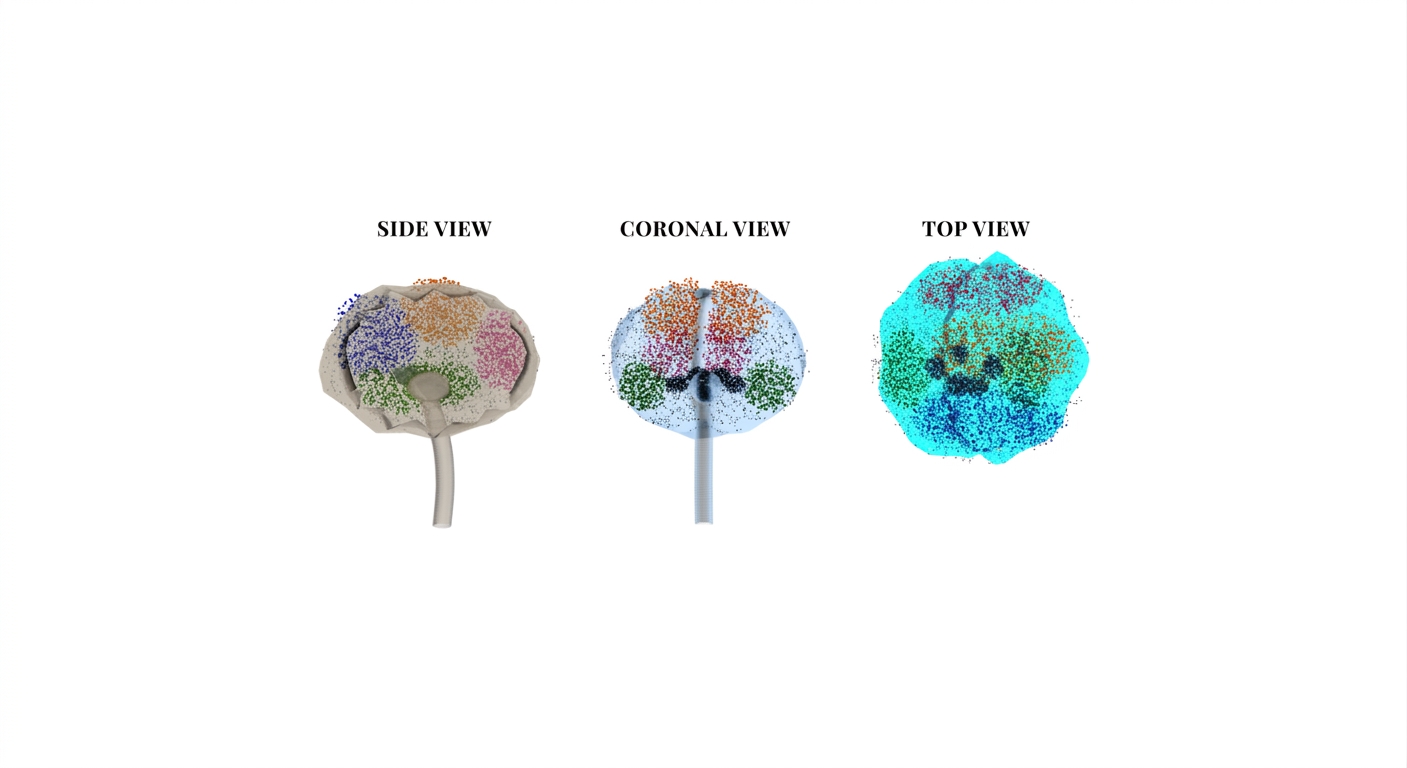
This spatial computing report shows that sports wagering is fundamentally neurochemical and only indirectly financial—by creating a WebXR experience that lets viewers see and feel, not just read about it.
The core science is that dopamine signals don’t reward, but prediction error—the discrepancy between the expected outcome and the actual one (Schultz et al., 1997). This theory provides a completely new perspective on gambling. The neural response to a guaranteed win will be insignificant; hence, a coin toss is a generator of prediction errors, with the highest neuronal responses at the 50/50 odds, which is the point of greatest uncertainty (Fiorillo et al., 2003).
The report then follows the mechanisms involved in betting through speaking about the work of the ventromedial prefrontal cortex involved in determining the value as odds become more certain and the insula creating the feeling of fear as the odds begin indicating failure; the stories of close misses and of wins, when losses can trigger the same neural circuits as real wins, especially for those who are subject to gambling addiction (Clark et al., 2009; Chase & Clark, 2010); the problem of loss aversion and “chasing,” when control of the prefrontal cortex is taken over by the striatum; and, finally, the small-loop cycles of micro-bets, which speed up the game more than the prefrontal cortex can register (De Martino et al., 2006).
The central point in this particular case deals with structures and the way that their repeated use eventually disrupts the functions of the prefrontal cortex of the brain responsible for controlling human behavior (Goldstein & Volkow, 2011), which corresponds with the classification of gambling addiction in the same category as other forms of addiction and behavior (Koob & Volkow, 2010).
The purpose stated in the report is to show this process in action to regulators, specialists, and relatives of patients. It should be noted that it is spatial computing that allows for a more precise understanding of the process of addiction compared to statistics because it allows for adjusting gambling to brain mechanisms instead of an abstract ideal.
Suggested Citation
Joseph, E. (2026). Spatial Computing Report: Inside the Mind of a Sports Bettor. The Academic Boardroom, ISSN: 3143-9160. https://doi.org/10.68208/tab-inside-the-mind-of-a-sports-bettor
From the Roar of the Crowd to the Hum of the Midbrain
If one asks the right question, they will receive a more adequate response, focusing on such external elements of the event as crowd cheers or the final three-point shot. Money, as well as cheers, should be seen as a proxy or symptom, respectively. Saying that a lot happens at the lower end of the brain and processes are going on in the brain that are not larger than the size of a human finger. Specifically, while one watches the bet line stating “+100” and sees that the player is moving towards the goal, the person’s brain is simply discharging dopaminergic neurons that register how unpredictable the next moment is going to be. Hence, the high does not come from winning. It comes from not knowing for sure if one has won or not. It is important to stress how brains handle uncertainties. (Schultz, 2016).
Thus, the claim from this report forms its main idea based on how it compares the nature of sports gambling. While it seems that it can be explained in terms of finance-related behavior, the report shows that it is based on the vision of sports gambling as a neurochemical process. What’s more, the sum of money that was used for betting and will be used after a bet has been made is simply the energy that consciousness uses, and reward itself is connected to predictions made in terms of the bet. Gambling addiction is a disorder that takes place within the same reward and decision-making mechanisms that are usually present in the case of drugs. (Potenza, 2013).
The WebXR simulation that accompanies this project serves as a portal into the living circuit. While any written explanation can only depict maximum uncertainty in the ventral striatum’s swelling, the simulation allows the viewer to become part of the experience, witnessing not only the amber turbulence of the expectation but also being able to observe the blue stillness of the outcome and the red shockwave of a loss. The next section explains the science depicted by the simulation, thus providing a comprehensive overview of the wager from the loud crowd noise down to the quiet activity happening in the midbrain.
The Engine: Reward Prediction Error as the Brain’s Betting Algorithm
The central principle in the study of reward mechanisms in neuroscience is not obvious: dopamine neurons simply do not code for pleasure but represent errors, meaning the difference between actual and expected outcomes. This signal is known as reward prediction error or RPE.
The first proof of this idea comes from experiments with recordings of dopamine neurons in behaving primates (Schultz, Dayan, & Montague, 1997). When a surprising reward came, the neuronal firing exhibited a sharp phasic burst. However, if a particular signal becomes a reliable predictor of a reward, then the neuronal firing occurs earlier, just after the predictor cue—the reward is now expected and does not produce any response. If the reward that was predicted does not arrive at all, the dopamine neurons become inactive, decreasing below the resting level — this is a negative reward prediction error or dip. Thus, dopamine does not indicate what is “good”; it only indicates whether something turned out to be better or worse than what one expected.
In a formal manner, this is the temporal-difference learning signal found at the core of reinforcement learning. This means that the brain is constantly improving its forecasts by reducing future errors. More recent studies have emphasized the fact that there is more to the RPE than merely being a teaching signal. In fact, the dopamine explaining the RPE can also be viewed as information regarding how well a certain organism is tracking reality (Gershman, 2017).
To a gambler, this is all there is to gambling. Neurochemically, a sure bet does not exist. In contrast, an outcome based on chance is the engine of prediction error. The betting market has reached the point of producing gambling content that is effective at generating prediction error through market pressure instead of any neuroscience principles. The following sections will be variations of this theme.
Real-Time Odds Dynamics
The 50/50 Clutch State — Maximum Entropy and Anticipation Variance
The story of this phenomenon has its first important nuance, and we see this being illustrated by the model in question. There exist two different forms of dopamine signals; however, they peak under different conditions. Indeed, the reaction of phasic RPE, in other words, the burst, is strongest when there is an unexpected outcome. There exists, however, a second type of signal, which is slower, involving prolonged activity of dopamine during anticipation before an answer is given. What is important, this signal reaches its strongest peak when the outcome is the least certain—not when the outcome is most likely to happen.
This important finding has the form of a typical inverted-U. While examining dopamine levels and manipulating the probability of rewards, scientists found that the anticipatory signal rises with the disappearance of certainty, peaking at the probability of 0.5, and is called “entropy”—where the outcome is the most informative. In other words, at 90% or 10% probability levels, the brain is still not as active as at the level of something like a coin flip. (Fiorillo, Tobler, & Schultz, 2003).
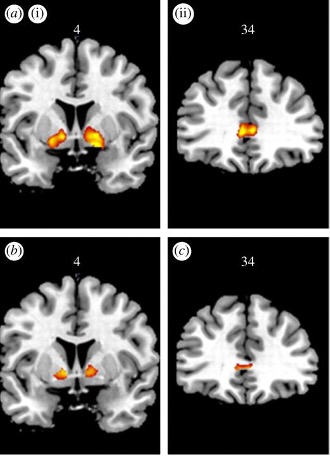
Human imaging has validated the human stakes. There is a clear distinction between the activity in the ventral striatum and related subcortical areas’ components, one of which deals with expected value and one of which deals with risk, with the latter directly correlating with uncertainty and achieving its peak where chances are even (Preuschoff, Bossaerts, & Quartz, 2006). This signal is characteristic of the so-called “clutch” moment—a game with a tie score, a money line at even odds, or a penalty about to be executed.
In the simulation, the moment in question involves the nucleus accumbens expanding and the surroundings becoming amber. Not the moment of winning, but ongoing background noise.
The Swing—Toward Certainty (vmPFC) and Toward Loss (Insula)
In the next step, we let the feeling be one of certainty (P → 0.90) and feel assured about the outcome. At this stage, we are more focused on asking ourselves “what is the decision worth” as the matter is getting clearly in the domain of the vmPFC. The vmPFC is a compartment of the brain responsible for carrying out evaluations of decisions. Knowing the principle of how the whole system of decision-making works, this can explain what in fact occurs now by the process of switching colors: blue is gone, and the blue-cyan stage appears on the way from excitement to serious business, filtering the issues to be accurate (Knutson & Bossaerts, 2007).
On the contrary, if the probability is P → 0.10, now we are experiencing something completely different. At the same time, the brain starts functioning on a different level, so we can notice that the prevailing structure is the anterior insula (which is called interoceptive mapping). The function of the insula in the context of decision-making is essential due to the concept of “somatic markers” offering the background for understanding how people are afraid of making decisions (Bechara, 2005). The other side of the anterior insula is that it is responsible for the creation of the very feeling of what a person experiences now (Craig, 2009).
This example illustrates the idea of loss aversion through a metaphor of tissue. It is not simply a case of lowering value in terms of expectancy but producing a physical signal of discomfort, or an unpleasant constriction, experienced by consciousness as tension. Thus, this represents the orange glow just appearing in the corners. It is an active pulling, rather than an unpleasant fading away of something the bettor would have always preferred. There are two swings—two different circuits, each with a different experience and perspective of the situation.
The Marginal Wager Effect
The Near-Miss Anomaly — When Almost-Winning Fires the Win Circuit
Look into one of the more fascinating facts in gambling science: there are losses that feel like wins. In the case of the two reels stopping after one symbol, of a parlay dying on the last leg, or of a buzzer-beater hitting the rim, those are all actually losses, just like any other loss, as they yield zero earnings.
However, as seen in one of the studies that became one of the cornerstones of the research in gambling, the so-called near misses—the losses that are almost winning—involve the same system of striatal parts of the brain and insula as winning, even increasing the desire of the people to play more (Clark, Lawrence, Astley-Jones, & Gray, 2009). The brain thinks that it is a win and prompts the gambler to continue trying and playing.
The phenomenon varies in its manifestation among different people, which makes it curative. The reaction of the brain is proportional to the level of gambling addiction: the more addicted a person gets, the bigger the reaction will be (Chase & Clark, 2010). The phenomenon is explained with the help of medical images showing that the brain receives signals on the closeness to winning and reacts accordingly (Linnet et al., 2012).
This is the gold-red crossfire in the modeling: the winning circuit igniting in gold; now becomes a loss in red. This picture captures the peculiarity completely—the reward machinery has exploded over the fact of a loss. For the bettor, “being close” does not mean being disappointed. It is a booster.
The Double-Down — Loss Aversion, Sunk Cost, and the Dimming of Control
Once someone is down on money, they may be inclined to stop betting. However, instead of stopping, the punter continues to play. To understand why this is the case, we must consider an asymmetric rule that dictates the way human brains evaluate gains and losses. Losses weigh approximately twice as much as equally sized gains. This phenomenon was formalized in prospect theory (Kahneman & Tversky, 1979).
Neuroscientific studies have demonstrated how this asymmetry works in the brain. As losses increase, an increased number of activities happening in the ventral striatal reward system happen in a significantly smaller degree than associated activities do for the equally sized gain, which represents a built-in bias against losses (Tom, Fox, Trepel, & Poldrack, 2007). The pain of losing is not just a metaphor.
Behavioral Addiction
The Micro-Betting Loop — Variable-Ratio Reinforcement at Machine Speed
When double-downs and near-misses are considered the extremes of the betting spectrum, the micro-bet would have to be equated with the whetstone for these two extremes. Thanks to in-play markets, it is now possible for a bettor to bet on anything from the next scoring drive to the next possession to the next point: “Will the drive result in a score?” Answers are delivered in a matter of seconds, and every new question quickly has a new market on its heels. This is not simply the result of a good product design initiative. Regardless of the process behind the decision, the result is that the micro-bet is the most effective punishment schedule in existence today.
The concept of a variable-ratio schedule in behavioral psychology refers to a situation where responses are followed by a reinforcement after an unpredictable number of responses and has been said to have the means to achieve the highest rates of response that cannot be extinguished. This is the process used in slot machines, and the micro-bet takes advantage of this phenomenon in sports betting. Every rapid adoption of an answer constitutes an event of a new prediction-error, and the effect of these unique monetary results on the neural-reward mechanism is mediated by the functions that originally evolved for the assessment of meals and other primary rewards (Sescousse, Caldú, Segura, & Dreher, 2013).
Speed is critical. Slower decision-making opens the door for the prefrontal cortex to use its analytic ability to its advantage. However, fast decision-making leads to instinctive feelings dominating the rational thinking process (De Martino, Kumaran, Seymour, & Dolan, 2006).
The micro-betting loop turns time into an enemy. It allows the process to be completed allegedly before a part of the brain responsible for self-control can react. The individual’s ability to react to the situation correctly defines whether he/she gets caught (Mohr, Biele, & Heekeren, 2010).
In the case of the pulse, which resembles stroboscopic strobe lighting, every new flash represents one reward cycle. There should be no break between the cycles, and that is a very important point.
The Failure of the Prefrontal Cortex — Executive Control Under Siege
All the previous explanations have established good brain functioning under stressful conditions. When an individual is under too much stress, the stress causes a fundamental alteration in brain structure. The essential structural idea regarding addiction is the malfunctioning of the prefrontal cortex, which leads to loss of its control over impulses for long-term purposes.
Dysfunction of the prefrontal cortex in case of all types of addiction leads to two major interrelated impairments. The importance of the drug or gambling is significantly increased while depriving a person of the ability to control their impulses (Goldstein & Volkow, 2011). The outcome is a brain in which the signal to start the process is increased, and the signal to stop it is diminished. It creates a mismatch that cannot be removed despite all good intentions. Gambling disorder fits this description exactly, which is why it is categorized in the group of addictions now (Potenza, 2013).
Importantly, problem gambling is more than just “excessive desire for rewards.” It represents a failure across various cognitive and psychobiological systems—distorted perception of probability, insensitivity to contingent outcomes, and reduced regulation by the prefrontal cortex combined into one specific disorder of decision making under risk (Clark, 2010). The brain that is in distress has lost its ability to consider risks when the stakes are high.
In the given simulation, this is the red streak—that is, splitting the frontal lobe under strain. This is the most alarming image out of the total sequence, as it cannot be undone quickly. The damage to the part of dlPFC that has been injured during only one instance of doubling down indicates what a heavy price has been paid: the damage is not simply temporary. One is convinced of still being able to manage the situation.
The Amygdala Hijack and the Hidden Island—When Feeling Overrides Reason
There is a reason why gamblers utilize body language to describe compulsion — they talk about craving, being pulled, and having a desire in their chest and stomach. Such language is described in a neuroanatomical manner, pointing to a structure widely accepted in modern addiction theory — the insula, which is also called the “hidden island of addiction” (Naqvi & Bechara, 2009).
The function of the insula is interoception — to map the internal state of the body into images of conscious feelings (Craig, 2009). In the case of addiction, this role has unfortunate consequences. The insula is responsible for sending a signal about physiological excitement caused by a stimulus — such as increased heart rate upon seeing an online bet — and transforming it into a drive. Its importance was illustrated by evidence showing that smokers with insula damage could stop smoking immediately, losing their urge (Naqvi & Bechara, 2009).
Overlayed on top of this is the speed problem now at its peak significance. Under quick and emotionally charged frameworks, the immediate emotional reaction of the amygdala takes control over decision-making, while the prefrontal brain regions that could otherwise intervene rationally fall behind (De Martino et al., 2006). This situation is called “hijack,” or not the absence of rationality but its being superseded and arriving half a second late after emotions have already made a choice.
In the simulation, this is the crimson amygdala shockwave, the emotional center that explodes and brings in the red color to the whole situation even before reasoning can step in. The neural basis occurs when every clinician hears the sentence, “I knew I should not, and I did it.” Knowing and doing belong to different systems, and in times of trouble, emotions win.
From Simulation to Public Health: Designing for the Brain We Actually Have
Taking a broader view beyond gambling shows addiction as a condition of the brain circuits that can be explained in three stages. These stages are the following: one involves excitement (binge/intoxication) due to the reward mechanisms; two includes withdrawal and distress (the previously mentioned when talking about the insula and the amygdala); the third stage is insomnia and anxiety (where craving is seldom controlled) (Koob & Volkow, 2010). Each stage has its negative effect on the following cycles of gambling.
This is the so-called brain disease model regarding addiction, showing that the positive outcome of this approach is that this model provides a different view of idiocy proper. In other words, relapse becomes one of the features of a chronic treatable illness (Volkow, Koob, & McLellan, 2016). The given theory proves it right: neuroimaging in the brain of an addicted gambler shows that it works in the wrong way and thus creates incorrect conclusions (van Holst, van den Brink, Veltman, & Goudriaan, 2010).
This brings us once again to the subject of simulation and the actual purpose behind its usage. The components of betting are constructed—either consciously or because of unintentional optimization of user engagement—to be effective according to every component discussed here: maximum entropy uncertainty, the near miss principle, the principle of chase, and the variable ratio principle. The public and the regulatory authorities cannot manage situations they do not have sensory experience with. A WebXR simulation that allows a lawmaker, a doctor, or a relative of a gambler to physically perceive the turbulence and the shock wave proves to be much more efficient than pure statistics. Thus, we can formulate a hypothesis that we can turn spatial computing into an effective instrument for creating empathetic spaces.
Editor’s note: This spatial computation exhibit is an example – an artistic display of neural functions, not a practical representation of a person’s brain. Please gamble responsibly. If you or someone else has any gambling issues, consult a professional. For help, you can contact the National Problem Gambling Helpline in the United States at 1-800-GAMBLER (1-800-426-2537), or they can be reached through chat at ncpgambling.org.