
Executive Memo: Can You Trust What’s Real?
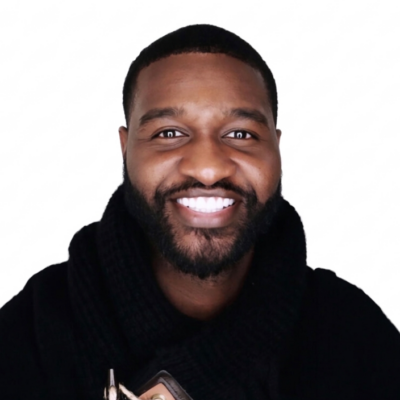

TO: J. Scott Christianson (Associate Teaching Professor Emeritus, University of Missouri)
FROM: Dr. Eli Joseph & Dr. Janice Gassam Asare
RECORDING DATE: August 31, 2026, at 1:30 PM EST
RELEASE DATE: September 21, 2026
PODCAST SCORE: The Heart Behind the Pen
EPISODE TITLE: The Death of ‘Seeing is Believing’: Can You Trust What’s Real?
Narrative Overview
Professor J. Scott Christianson (“Prof C”), as an Associate Teaching Professor Emeritus with over 20 years of experience implementing corporate IT, has mastered the art of transforming academic AI research into practical business techniques. His lengthy career begins as a leader of a technology servicing firm and then as the head of the Entrepreneurship and Innovation Center in the Trulaske College of Business, University of Missouri, which has given him the necessary knowledge and experience to provide his unique perspectives on the existing academic and theoretical realities.
This episode will discuss the pragmatism required to succeed in today’s age of technological disruptions. Unlike the others promoting artificial intelligence theories and concepts, Christianson proves that he sees things from a critical perspective with regard to evidence-based concepts, and will provide a detailed discussion on his new book “The AI Mindset” covering the issues of corporate culture and strategic thinking as more important elements than just using the modern digital technologies.
Moreover, we will address the problem of risks connected with new technologies, including both existing problems emerging from deepfakes and algorithmic misinformation, as well as hidden environmental costs of using generative AI.
Editor’s Note: The Academic Boardroom’s episodic memoranda publish the full scope of our internal preparatory research, core market data, and targeted queries before recording. Some of the questions documented before our recording may have been modified or omitted from our episode.
Possible Questions to Consider for Our Conversation
The Translator’s Journey & The “AI Mindset”
- Bridging the Divide: How has a dual career in corporate IT implementation and academic research shaped your unique approach to translating complex tech trends for business leaders?
- Escaping Pilot Purgatory: From your experience, what key operational differences separate the businesses achieving real, scalable results from those just running proof-of-concepts?
- The Tools vs. The Mindset: Your forthcoming book is titled The AI Mindset. Why do you argue that cultivating a specific organizational mindset is far more critical for practical AI adoption than simply acquiring the “right” technical tools?
- Practitioner’s Skepticism: What is a recent finding in the research that would genuinely surprise corporate leaders, and where do mainstream headlines most frequently get the research wrong?
Managing Risk, Trust, and the “Seeing is Believing” Era
- The Death of “Seeing is Believing”: If we can no longer trust our eyes and ears, how should businesses and ordinary citizens determine what is authentic?
- The Detection Arms Race: Why do AI and deepfake detection tools continually seem to lose the arms race against generative generation tools, and what are the strategic implications of this for corporate security?
- Day-to-Day Guardrails: How do you personally draw the line? Where do you find AI highly effective in your daily work, and where do you strictly refuse to use it?
The Hidden Costs of Generative AI & Executive Foresight
- The Social and Environmental Bill: Generative AI comes with massive, often invisible external costs—including heavy energy demands, labor exploitation in data labeling, and intense copyright battles. Which of these social costs concerns you the most, and what steps should systemic leaders take to address them?
- Advising the Auditors: What is the biggest mistake leaders make when rolling out AI guardrails, and how should risk professionals adapt their frameworks for generative technologies?
- The Future of Knowledge Work: As someone who regularly trains journalists and business students, how must our educational and professional training models evolve to ensure the next generation of knowledge workers is truly “AI-literate” rather than just “AI-dependent”?