
9/11 Spatial Computing Memories: What the Air Remembers


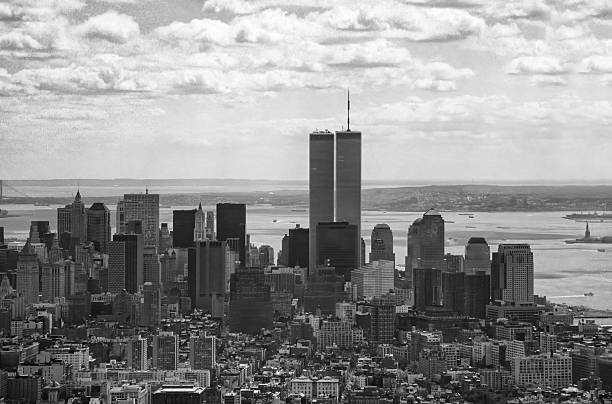
Those who were in NYC that morning are likely familiar with the color of the sky and feel bitter about it. It was a bright, pure, fresh blue, typical of early fall. People may remember how light spread over the river and what they were doing on the streets. They can remember the noise and see things. And then whatever follows after seeing is the result of seeing.
History is the light that keeps its promises. We have TV reels and pictures: the first plane, the second plane, and paper thrown about in the air; those fallen angels; the people who had to jump out of the building; and the gray figures going north in a blizzard that is not snow. The frames that we have seen so many times have made the act of seeing something a releasing formula. A photo is that great. But the journey through a picture becomes familiar, and familiarity is the enemy of impermissibility.
However, the air would not be contained within the glass.
We shall begin with the morning after, when the body became very loud. The sirens were now quiet, and the news crews were getting ready for the next hour of news reporting. Nevertheless, those residing and working in the vicinity of Canal Street and those forced to be at the debris site could not distract themselves from what was happening, as it was in the air. It permeated houses and settled on the window ledges as dust. It stuffed its way into staircases and elevators as well as stuck to the fabric of garments left at home and to the little boy’s hair of the child who had been taken from school without any explanation.
Imagine a person who ended up in Lower Manhattan today. They thought of the experience not as an image but rather as something that was happening to them—something that they should consume from start to finish. Thousands of breaths would have been taken throughout the day. Namely, one has to inhale, and there is no way to escape that particular process.
What came to that person was something with alkaline, gritty qualities associated with the dust of concrete, ash, burnt paper, and metallic heat. It would be wrong to label it pure odor. The experience involved the heightened feelings in the back of one’s nose and the throat that call for a reaction in the body before any thoughts are formed on the subject of what is felt. It was not just a sensation of smell; people felt more like they experienced a trauma.
Breath is something that does not depend on your wish to breathe or not. It is the hard core of the issue being discussed. Images can be ignored or covered, and this gives one some power over what one sees or experiences. There is no chance to influence the air around that is entering the bodies of both men and women from Lower Manhattan. The event was happening to them on a daily basis and brought as many as twenty thousand breaths without any regard to what they had wanted. Thus, they did not see it but took part in it by means of their own inhalations.
This discrepancy is important and should be taken into consideration even as we talk about the odour of Ground Zero, since it can create an impression of the event that is something abstract.
The situation has turned a bit more complicated. The humans managed to adapt. It seems that the olfactory sense can act both kindly and strangely at the same time. If a person stays in the same environment for a long time, they will stop reacting to different odors. For example, if one is in the stink of garbage for the fortieth day, that person is not able to smell what other people smell outside of this area.
It seems that the olfactory sensation still exists inside that person’s body, and something is happening inside of them, but the sensation is not at its peak. One would love to tell their experience to their kids, but the whole story is empty.
Consequently, what we have in the archive is not so rich. The stored images deliver what happens on the surface. The data is derived from interviewing eyewitnesses. Research on ordinary people experiencing the memorable events gives disappointing results. It is an oddity how faded memories change, since within a year memory declines by a noticeable amount, while in the next few years the decline goes even lower; despite this, the confidence level stays unaltered.
A suggestion has appeared that may be a little bit ambiguous, but it should be taken seriously. The idea is to use spatial computing and recreate the chemical environment of the place under study. Nevertheless, the very first reaction I had was to cut off communication.
The first step toward addressing ethical issues is to shrink back instead of leaving it behind. The proponents of this concept appear to be aware of this. They do not express their belief that creating the atmosphere is something good, as it may be; they argue that it should be proven with enough reason, given that there are dissenting voices claiming that it is harmful. The atmosphere that they want to recreate is a well-established damage done through the years, and thousands of emergency workers and citizens continue suffering from it. Any recreation that does not consider this factor is staged rather than preserved.
I appreciate the capacity for uncertainty. Science, however, may serve as evidence for the purpose of establishing where the limit lies. Scent has been proved to be able to give life to the virtual location and help revive the memory.
What, however, is still unclear and needs further investigation is the concept of having been to the place beforehand. A question to be asked is whether a stranger can sense the tragedy of the place due to its smell. The study does not provide the answer to the latter; the researchers work on the machine that is meant to answer the question and ensure that its work is ethical.
The last provision could probably be treated as the most important sentence within the project. For a person simply visiting the place, an exit button is just a gesture. For a survivor, however, the exit button represents hope and something much deeper.
What, then, are these series of art collections about? I think the main point is a fear that lies behind every act of historical commemoration. Remembrance may become forgetting after certain repetition of time. We create memorials in order not to forget what we grieve about; however, memorials become a substitute for the very grief. In other words, we remember the image instead of the event. The anniversary date replaces the original date, while the body that was the first witness of the event has no rights at all.
This aspect of reality shows the unspoken worry of knowing the messages from the historic times, which means that repeated remembrances lead to periods of forgetfulness. Monuments remind us about the events that we do not remember anymore, and later we will start to remember the monument instead of the event. The image will substitute for the event, the date will replace the event itself, and the person will not have a place at the table since there are no pictures of him.
Moreover, time is always working against us. The people who have lived through that day are also getting older. Some of them have already died because of the chemicals that are discussed in this article. With every passing year, fewer people will be able to say, ‘I have smelled it.’ The years of time will take away the knowledge that was not put on paper. Everything that survives is what we managed to preserve somehow. If this form turns out to be light, the event will become a great visual experience in one hundred years but completely non-smell.
It is not yet known whether the immersive headset will be able to bring back the eliminated odor, but the issue needs to be approached in a respectful way. Indeed, before we discuss what the people who have been there felt, we should realize that they were more than just witnesses of history. They were part of history, as their physical form was used to capture an event that is now.
The wish to keep the impossible is soft-looking. At the same time, we must keep in mind that it would not be right to take this hard job inappropriately. Besides, working with air seems to be impossible.
