
John Galliano at the Met: Can Accountability Be Curated?

The Announcement
John Galliano was the British fashion designer known for restoring art and drama to the fashion scene.
His second chance in life came with the announcement that the Metropolitan Museum of Art was going to give him a much more long-lasting achievement: being enshrined in fashion history and recognized by the brands he cooperated with and his craft.
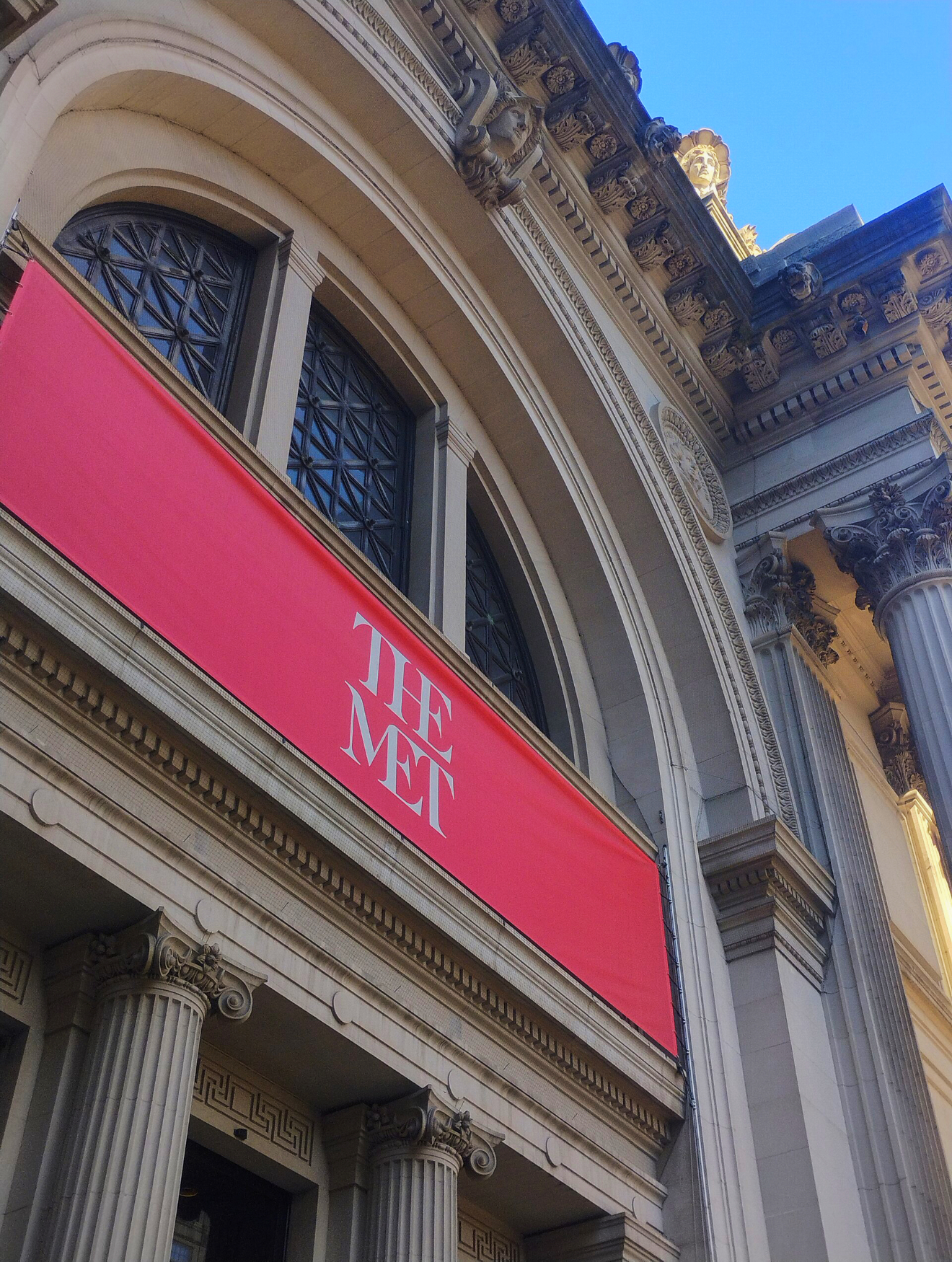
Set to occur on May 9, 2027, John Galliano: Horizons is an exhibition dedicated to the fashion designer’s works over more than four decades. John Galliano became the third living designer to be honored with his own exhibition in the museum’s fashion department history. The first two were Yves Saint Laurent in 1983 and Rei Kawakubo in 2017. The rarity makes the exhibition more important. Based on the information provided by the Met Museum of Art, the exhibition will consist of clothes, sketches, research materials, and toiles divided into three blocks on the cultural context of Galliano’s life and artistic path.
The Met Gala will take place on May 3, in celebration of the exhibition opening. While many people know the event for its famous red carpet, the gala is known as the annual fundraiser of the Costume Institute and one of its major sources of revenue for exhibitions, acquisitions, and operations. This means that this event is both a commercial and curatorial one. The museum acts like an editor, providing the exhibition’s main ideas. The gala has the kind of visibility that no cultural institution can achieve. The Met officially claims that the gala started as a midnight supper in 1948 and became one of the most important events in the fashion world.
The machine will now work behind the designer who should be discussed in connection with the year 2011.
After the footage of an incident involving Galliano in a bar in Paris where he expressed antisemitic remarks went viral, he lost his position at Dior. At a French law court afterward, Galliano was found guilty on several charges of making public remarks regarding race, origin, religion, or ethnicity and received a suspended penalty. He underwent treatment, offered his apologies, and talked to Jews, including Holocaust survivors. His return to professional life started in 2014 when he was employed by Maison Margiela until 2024. Almost two years after that, in March 2026, Galliano announced his collaboration with Zara.
Therefore, the announcement of the Metropolitan Museum of Art provoked the question about whether it is possible to separate the art from the artist. However, museums would consider the question to be incomplete.
A Retrospective Does More Than Look Back
Someone studying modern fashion cannot write about it without mentioning Galliano. His effect on silhouette, storytelling, referencing history, and presentation on the runway makes it impossible to exclude him from the narrative of fashion history.
The difficulty lies in the form of acknowledgment that the Met had decided on. The retrospective devoted to a living designer does more than show that his creations have existed. It instructs the visitors how they should remember it through selection, interpretation, positioning, and publishing.
Sociologist L. E. A. Braden investigated the influence that exhibitions have on memory regarding history. She says that curators create associations that later influence which artists will represent certain epochs or movements.
That influence is easily observable in the Costume Institute, where the exhibition is complemented by the catalogue, press mentions, and a ball turns a curatorial idea into great popular culture. The Met is going to do more than document Galliano’s reputation. It will help to determine what that reputation will eventually look like.
It does not mean that the exhibition itself violates anything. It means that its presentation is crucial.
The Limits of Separating Art and Artist
Philosophers have long debated the role of moral considerations in aesthetic judgment. The advocates of aesthetic independence insist that an artwork must be judged only on its merits and without reference to any moral issues related to its author. The opponents argue that how the artwork is received may also have an influence on its meanings. Laura D’Olimpio, philosopher and expert in moral and aesthetic value relationships, states that the dispute between the supporters of aesthetic independence and its opponents includes how judgments may be made concerning art and how people may be taught to respond to controversial artworks. In contrast, individual viewers have a right to express their opinions on the issue of aesthetics. One may either like the dress or be negative about it.
On the contrary, a museum positions itself differently. It has both financial reserves and authority. The scholar Erich Hatala Matthes differentiates between the role of individuals and institutions in the process of judging morally ambiguous art works. Personal judgment does not have the same ethical implications as public endorsement.
That is why the Met is faced with a bigger problem than just judging Galliano’s dresses from the aesthetic perspective. It needs to work out its approach to these pieces of art.
Who Owns a Fashion Legacy?
Fashion has an unusually complex role in the debate revolving around artist and art since the term “artist” seldom refers to the individual who creates the work of art alone.
Galliano produced his creations for numerous fashion houses, each with its own brand recognition, archives, and corporate histories. Products that can be attributed to Galliano were created with the help of various specialists like embroiderers, textile producers, pattern makers, and workshop staff members. The process of creating clothes may start from the genesis of the sketch made by Galliano or from the technical revisions done during fittings in the workshop without any participation of the designer.
Ownership, creativity, and culture do not always meet in one person. Eleonora Rosati, a legal scholar, mentions in the Journal of Intellectual Property Law & Practice that designers seldom create by themselves when producing collections. Quite often the designer’s role in the production process is much smaller than that of the people who worked on the collection with him.
A Galliano exhibition is intended to showcase all of the creations of the designer by situating them in the historical context created by the iconic designers like Dior, Givenchy, and Margiela, pointing out the fact that despite numerous people in the production team who made the collection, one person is given the credit.
This contributes to and makes the creation of the narrative and makes it. Identifying the ateliers does not take away credit from Galliano.
Redemption Is Not an Exhibition Label
So, let’s conduct a few analyses of the role of the Met Museum exhibition. It has already indicated that it is not shying away from the controversy. The first part of the exhibition is entitled “Bearings,” and it is meant to spotlight Galliano’s conduct, which is racist, antisemitic, and anti-Asian; his firing from the job; and his conviction, rehabilitation, and admission of guilt. According to Andrew Bolton and Anna Wintour, they consulted Jewish authorities while working on the exhibition. Jonathan Greenblatt, the head of the Anti-Defamation League, stated that Galliano sincerely addressed the problems related to his actions, and it is necessary to take his attempts to rehabilitate into account. The Associated Press reported both the consultations and the stance of Greenblatt.
However, these actions are of importance. They show that the Met realizes that silence is tantamount to a sin. Despite that, contextualization can actually pose a problem. The narrative, which would seamlessly transition from crime through addiction and rehabilitation to creative return and getting recognition from the museum, can turn rehabilitation into a finished story.
Forgiveness is more complicated. While Galliano may genuinely wish to apologize for his conduct and work hard on making amends, the people he hurt do not have to feel the same way about his behavior. While it is possible to explain his actions due to his addiction, this does not eliminate his responsibility. Being back in the fashion industry proves that the industry accepted him back, but it does not provide for moral rehabilitation as such.
Also, it is important to note that he is alive and is not only seeing his comeback in fashion but also starting his collaboration with Zara. This may lead to an increase in cultural and economic significance of Galliano’s name and popularity. Thus, it is not a dead man’s interpretation of the closed historical background.
What Responsible Curation Would Look Like
Whether there will be something controversial in John Galliano: Horizons might not matter as much as how the visitors will interact with it.
It is essential for a responsible curator to accurately account for the events of 2011 and the court’s ruling. It must make a distinction between explanation and justification, sorrow and correction, returning to the profession and public forgiveness. The points of view of the communities affected by Galliano’s provocations must be included as part of the exhibition’s intellectual content and not as proof of consulting activities behind the curtains.
The exhibition must resist the temptation to consider the scandal as something that visitors go through before they enjoy something beautiful. If the accountability is confined only to “Bearings” while the rest of the exhibition emphasizes genius, which is free of any obstacles, the exhibition itself will conclude.
Suzana Milevska, the curator and researcher, says that curating should be perceived as a mediation process between aesthetics and ethics. This mediation may be performed through the choice of the exhibits, descriptions, sequence of the exhibition, and the use of particular voices.
The exhibition must also recognize that the work is collective. Listing collaborators, ateliers, and masters would make it possible to show that this success does not belong to one extraordinary person.
The Museum’s Real Test
There is no requirement for the Met to take a stance on whether to erase Galliano from the annals of fashion or to honor him without caveats. What he has created must be understood on account of its impact on fashion. His misdeeds also deserve scrutiny so that we do not impose a sanitizing version of history on future generations.
John Galliano: Horizons could serve as both a model of showing problematic legacies of prominent figures and of the ease with which institutions turn difficult stories into celebratory accounts.
Exhibiting an artist’s work does not clear him of any wrongdoing or misbehavior. However, in the case of living artists who continue making money from their practice, the institution should be clear about the difference between preserving and building a legacy.
Editor’s Note, August 31, 2026: The Metropolitan Museum of Art and John Galliano have announced that the exhibition discussed in this article will no longer proceed as planned. Read Kélicia Massala’s follow-up analysis here.